The plan was simple, as always: rest, look at the sea, walk around a bit, eat something, and return. It was only once we got there that it turned out the whole region was built on cliffs, slopes, and every possible incline, and the people responsible for designing it clearly had something against flat terrain. And so began my five-day battle with the geography of the French Riviera. A geography where the elevator very quickly turned out to be the most important piece of infrastructure.
Nice, or first impressions
We landed in Nice with a two-hour delay. A good start. Something broke in Italy and for a while, instead of flying to France, we spent significantly more time in the plane than the schedule predicted. In the process, WizzAir’s elaborately crafted strategy of scattering our family all over the plane went right out the window. Sometimes even a flight delay has its upsides.
After arriving, we bought the Pass SudAzur — a card that lets you use trains, buses, and trams across the whole region. One hundred euros for two people instead of almost two hundred. So right from the start, we managed to save enough that we could comfortably put that money toward gifts. Travel economics were saved.
On the first evening, we planned to climb Castle Hill. I looked at the hill. The hill looked at me. We postponed it.
First of all, it was already late; second, we were wearing our Warsaw clothes, which in that temperature could have started functioning as thermal wear halfway up. So we decided not to test whether there was medical help at the top.
Èze, or a lesson in humility
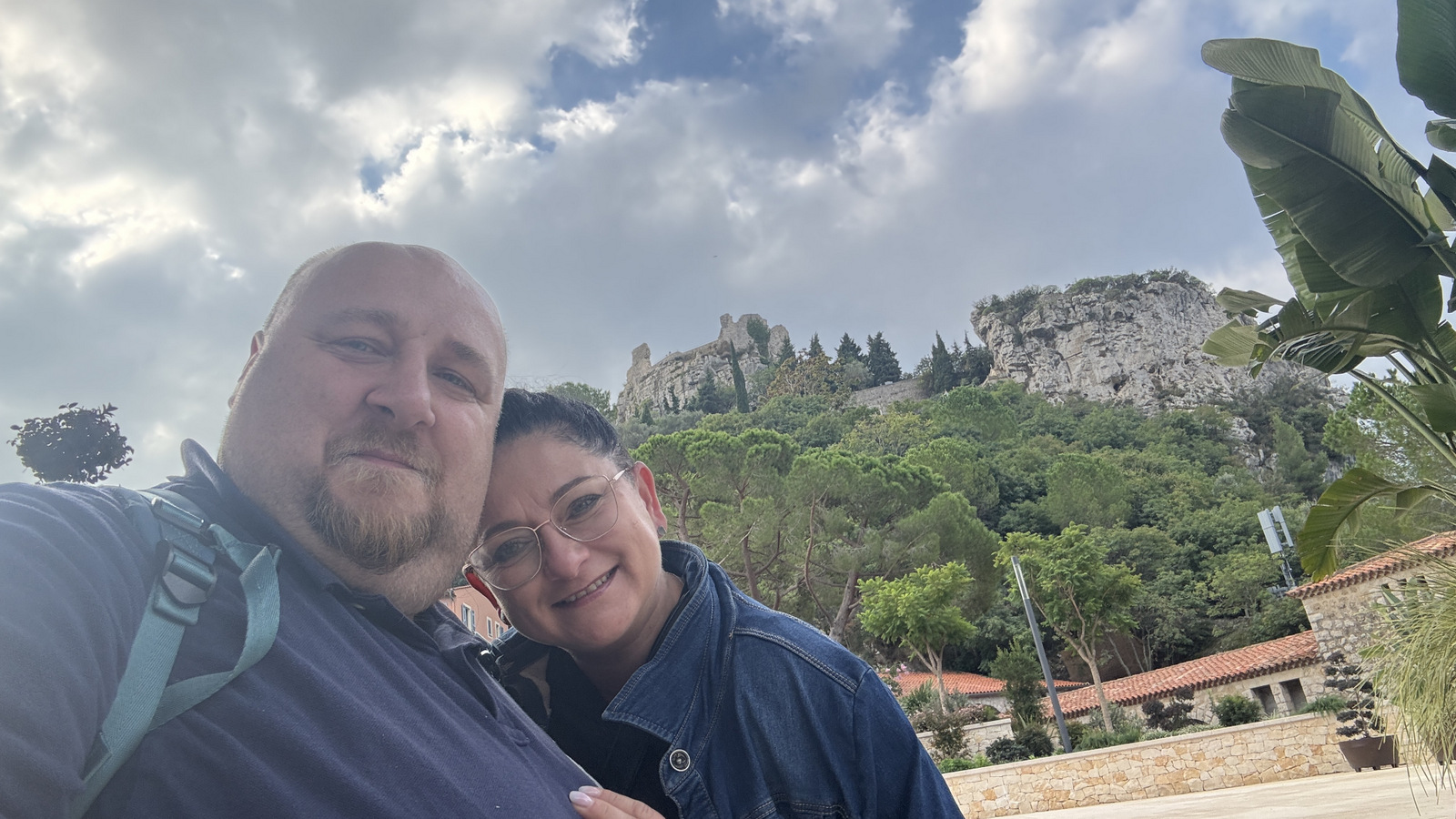
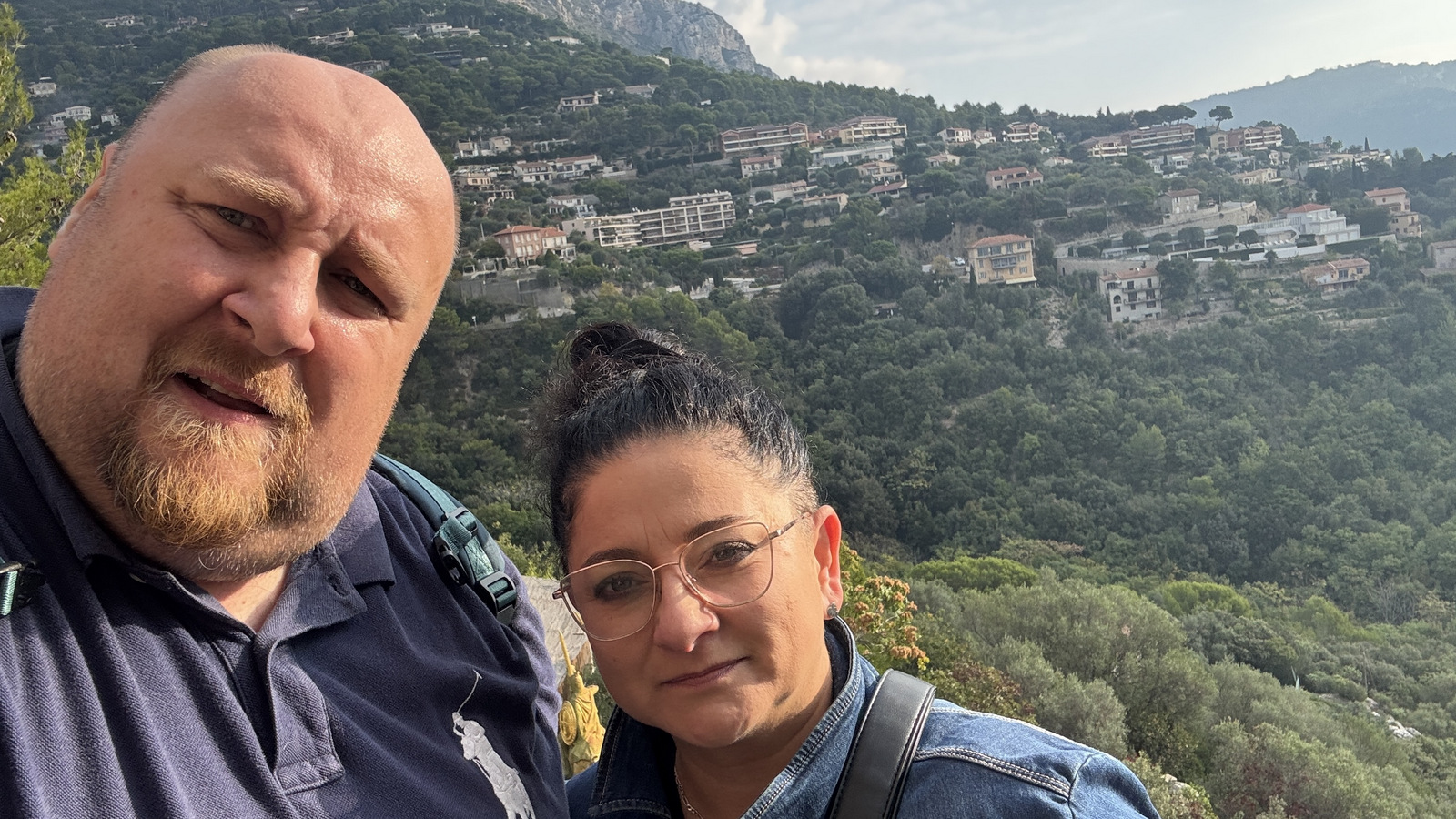
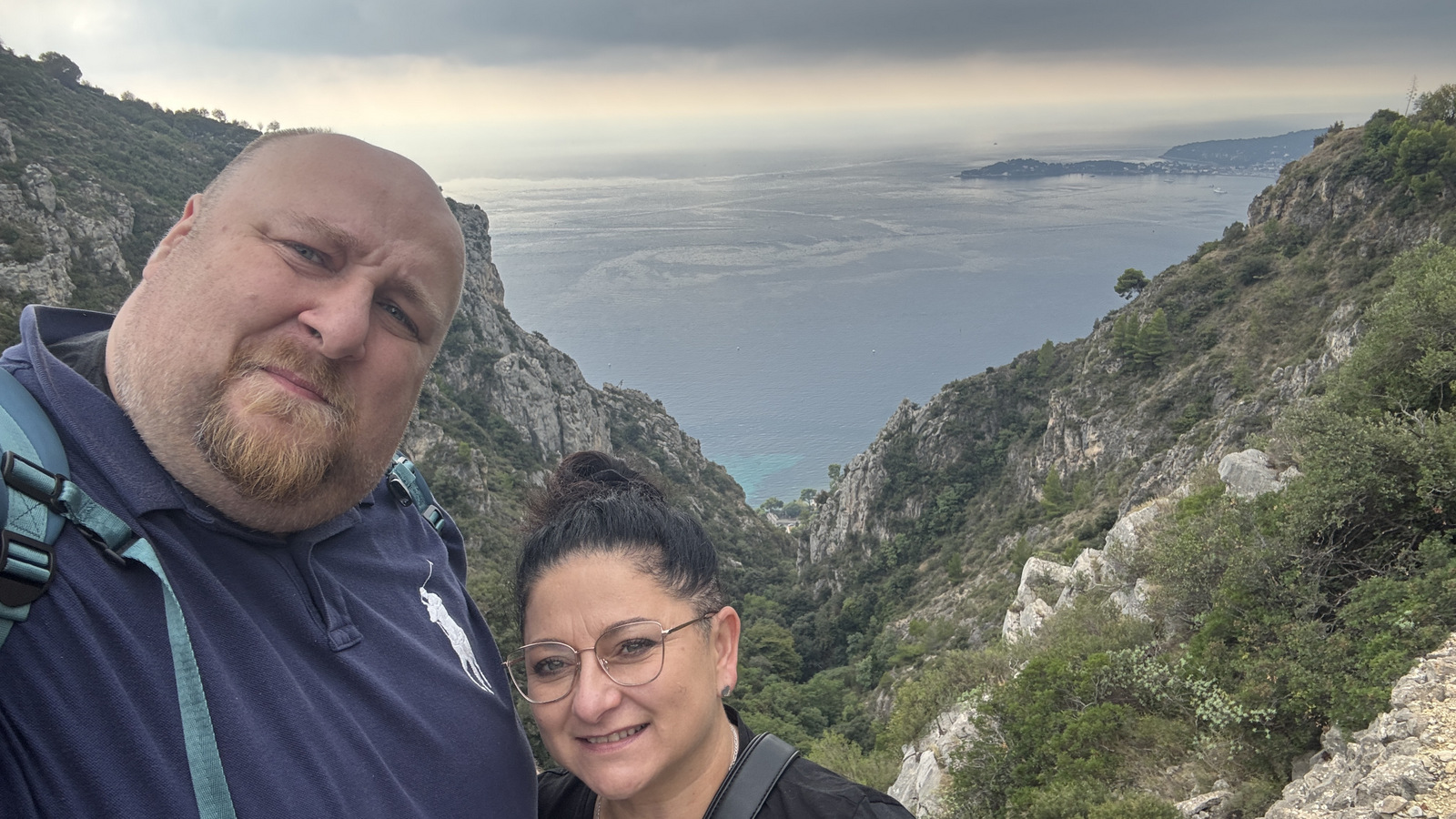
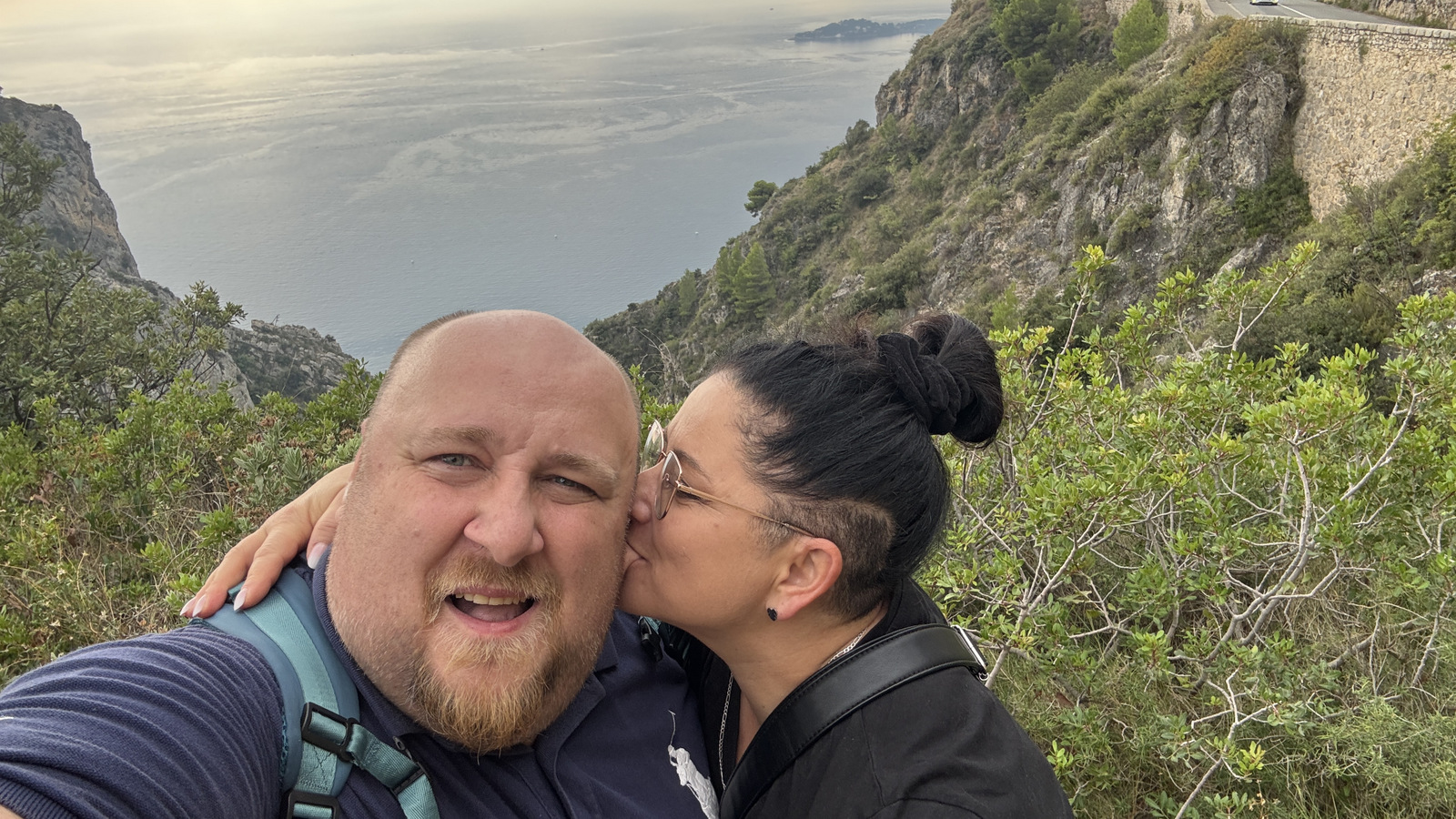
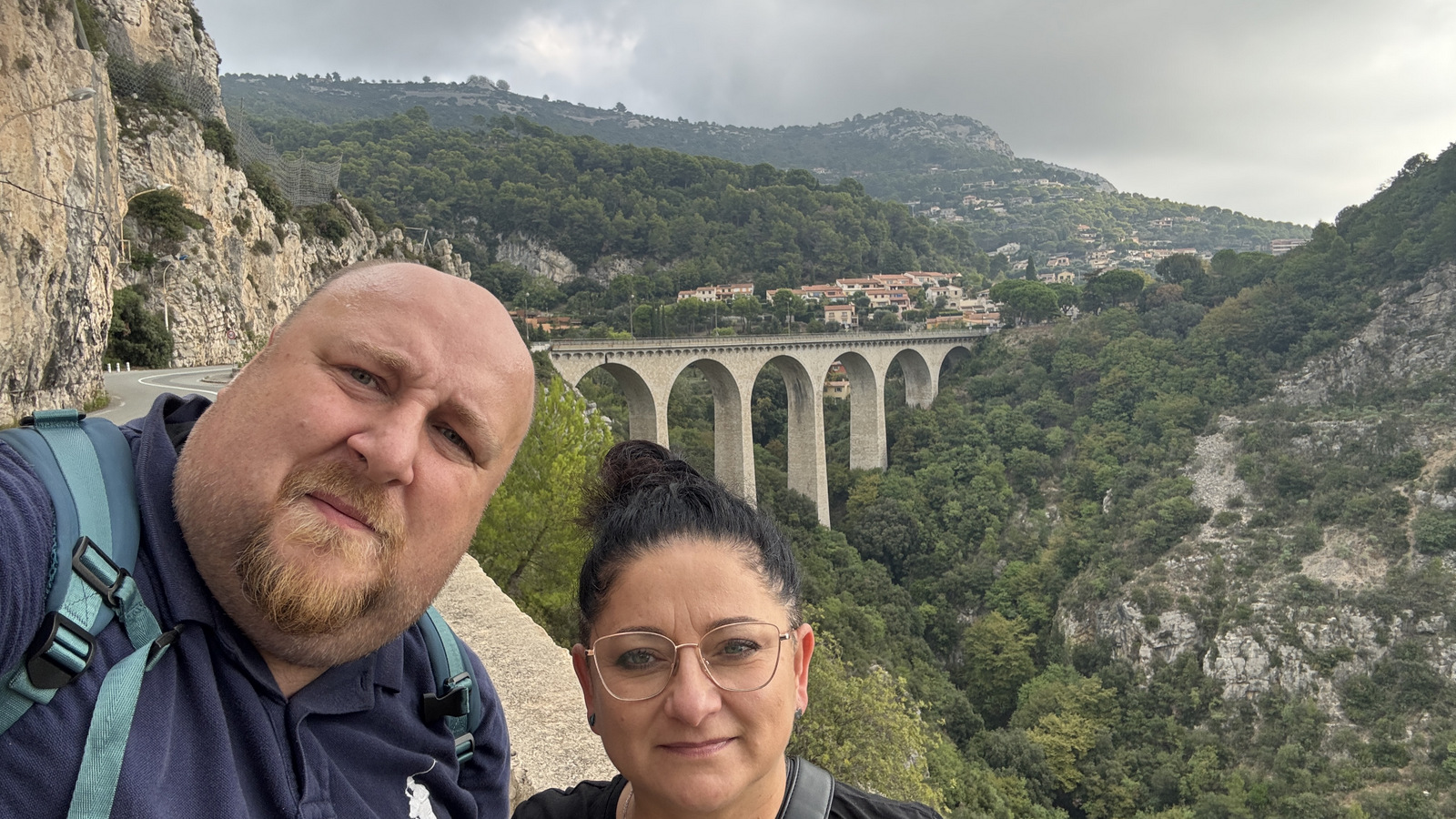
Èze is a medieval village stuck to a rock about four hundred meters above the sea. It looks like a fairytale in pictures. It does in reality, too, except pictures have the advantage of not showing you the elevation gain. A bus takes you to the very top, which sounds like the solution to all your problems for the first two minutes. Then it turns out the village itself was built on the principle: if something can be placed higher, why not just do it? There was no “slight incline” there. It was vertical. Luckily, we found an elevator. The elevator runs from the parking lot to level zero. Which is about as useful as a screen door on a submarine.
There is also the famous Nietzsche path. The philosopher supposedly walked down this road to the sea and brainstormed “Thus Spoke Zarathustra.” Of course, the plaque doesn’t mention what else he was saying while doing it. I can guess. I suspect not all of his thoughts were suitable to put on an information board.
We left Èze with a full set of photos of narrow streets, stone houses, sea views, and a very strong conviction that on this trip we would primarily choose attractions we could drive right up to.
Next stop: Monaco.
Monaco, or luxury, elevators, and a roaming bill
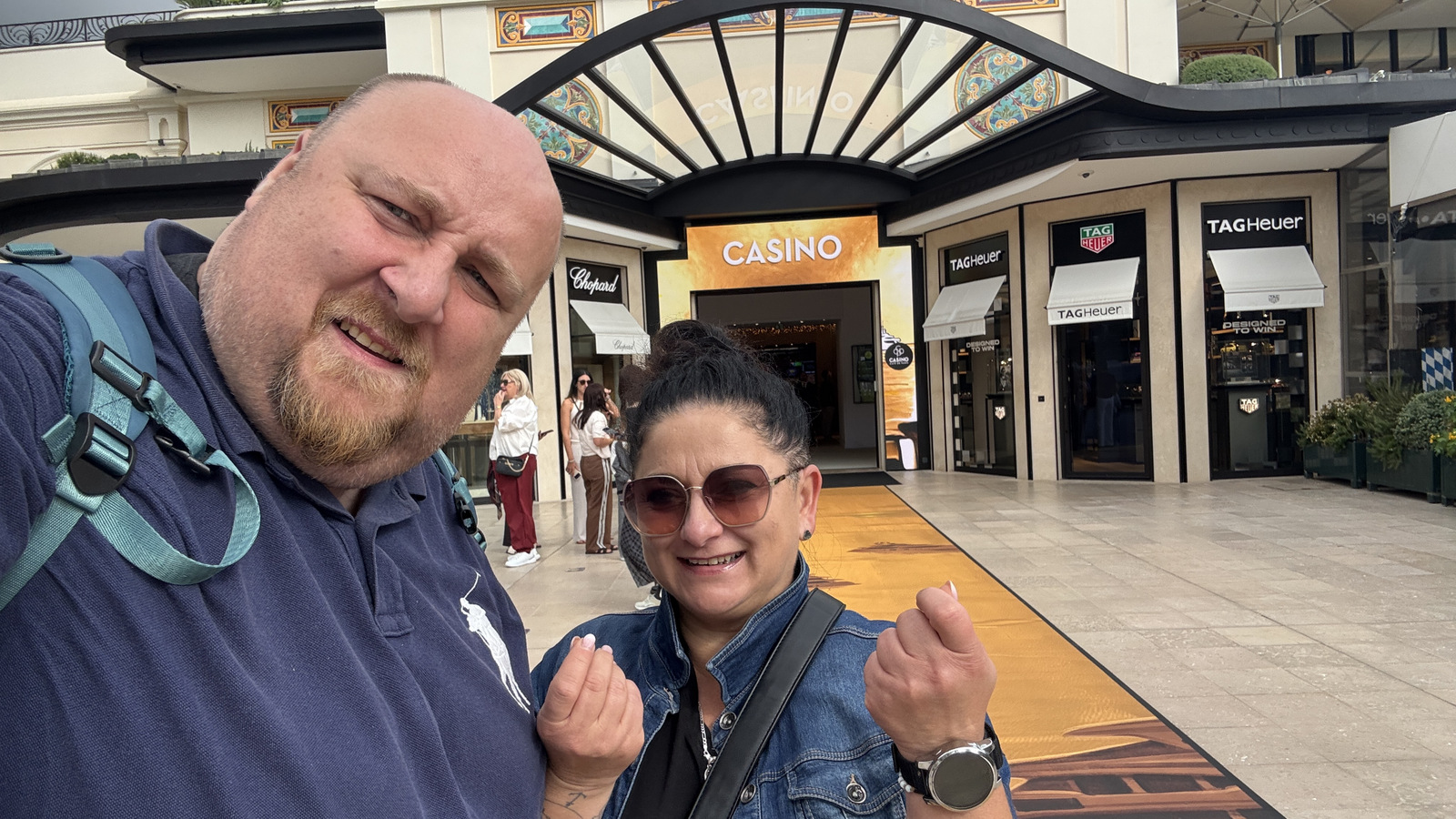
We looked at the Monte-Carlo casino from the outside. I consider this the best investment decision of the entire trip. I didn’t lose a single euro cent.
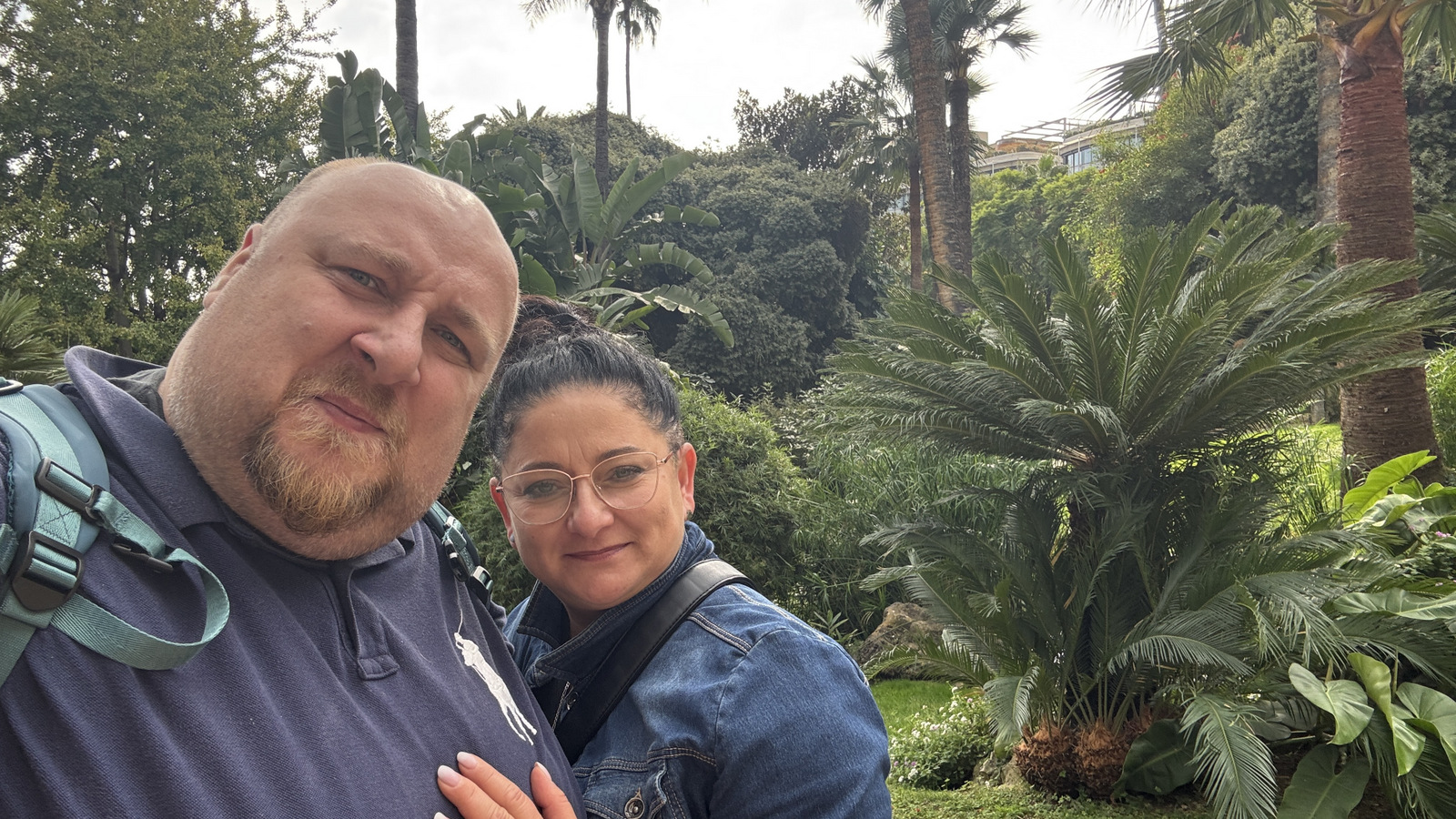
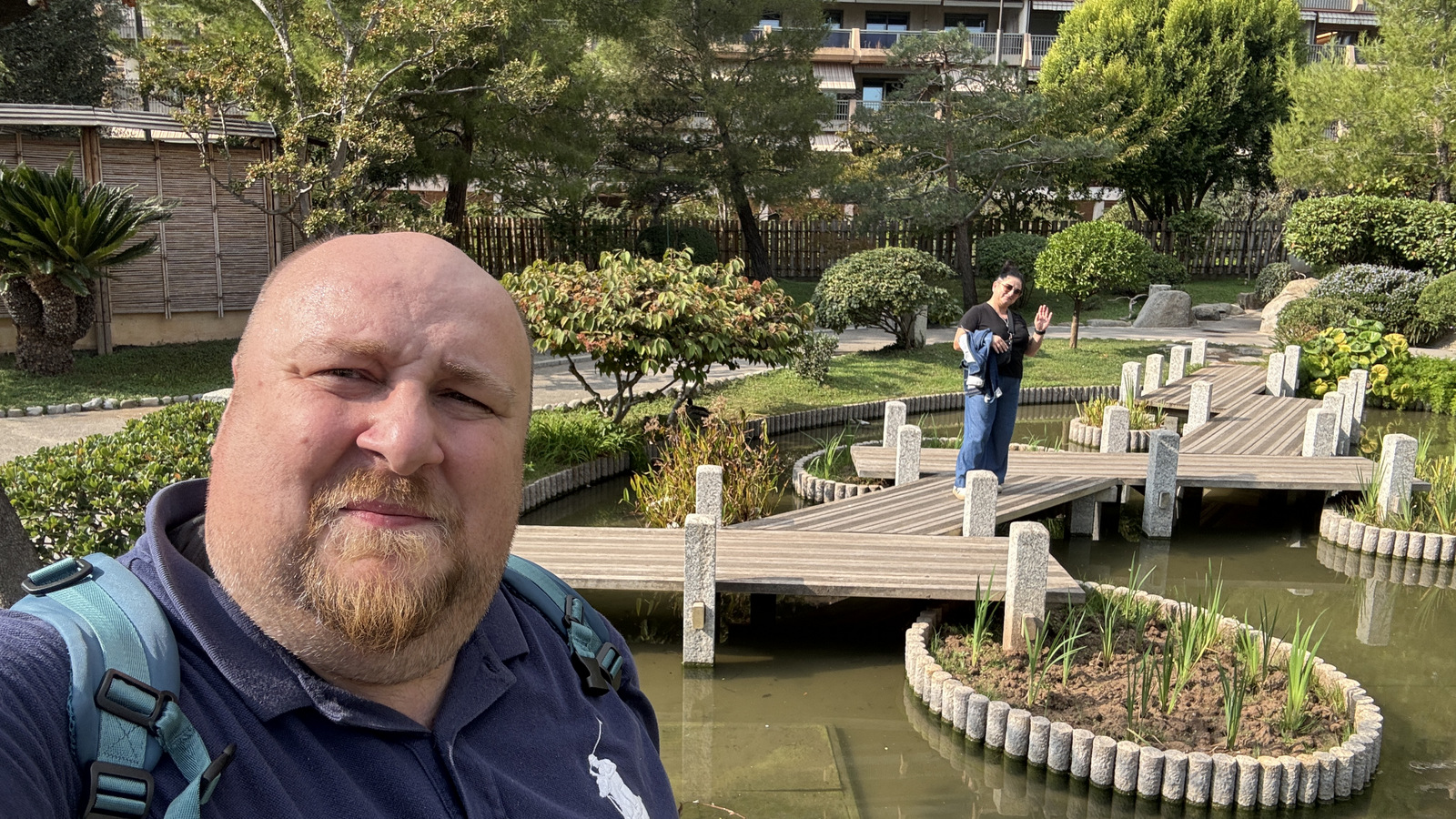
Then there was the Japanese Garden. Free, peaceful, and above all, flat. Three traits that rarely appear at the same time on the French Riviera.
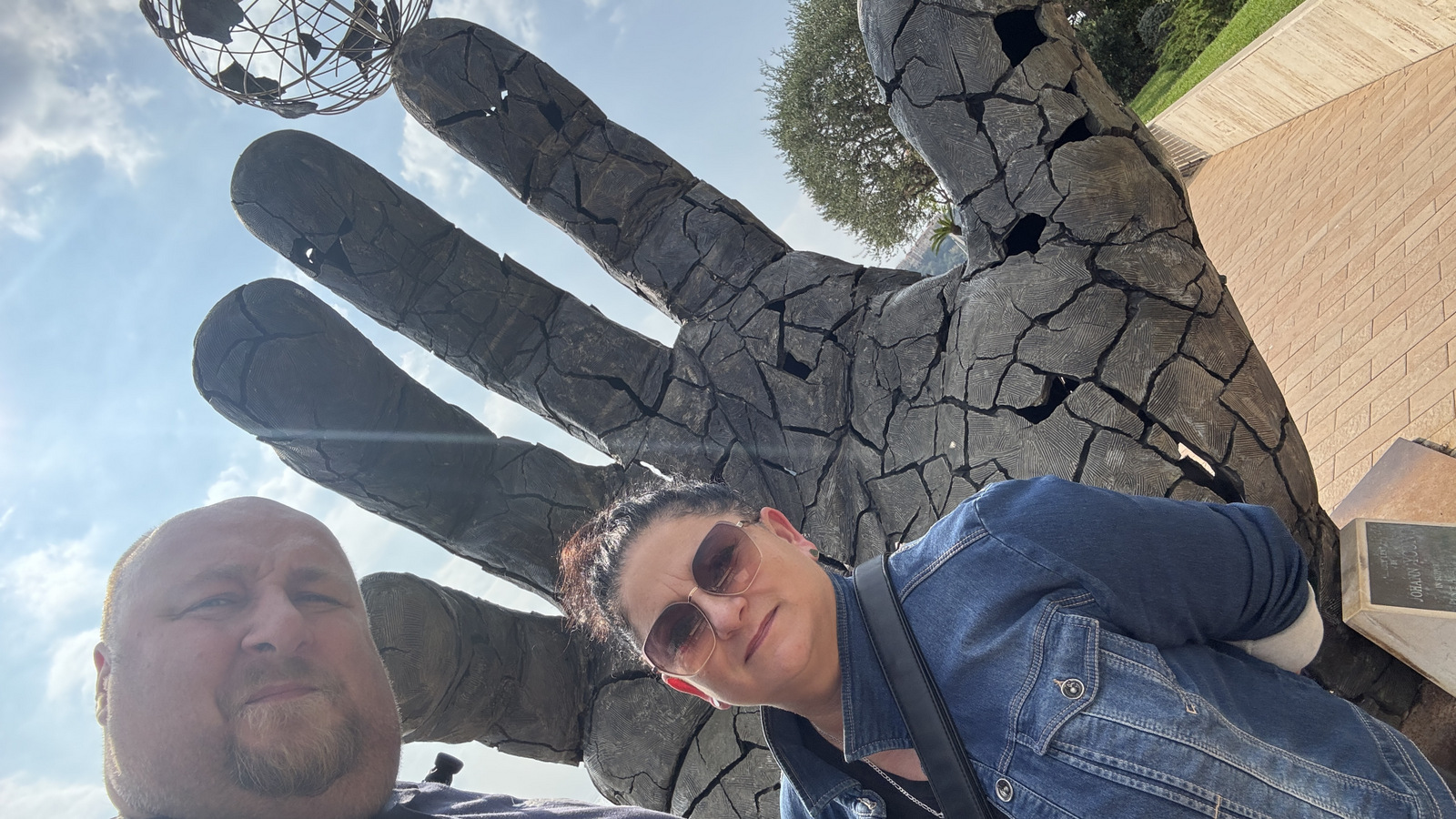
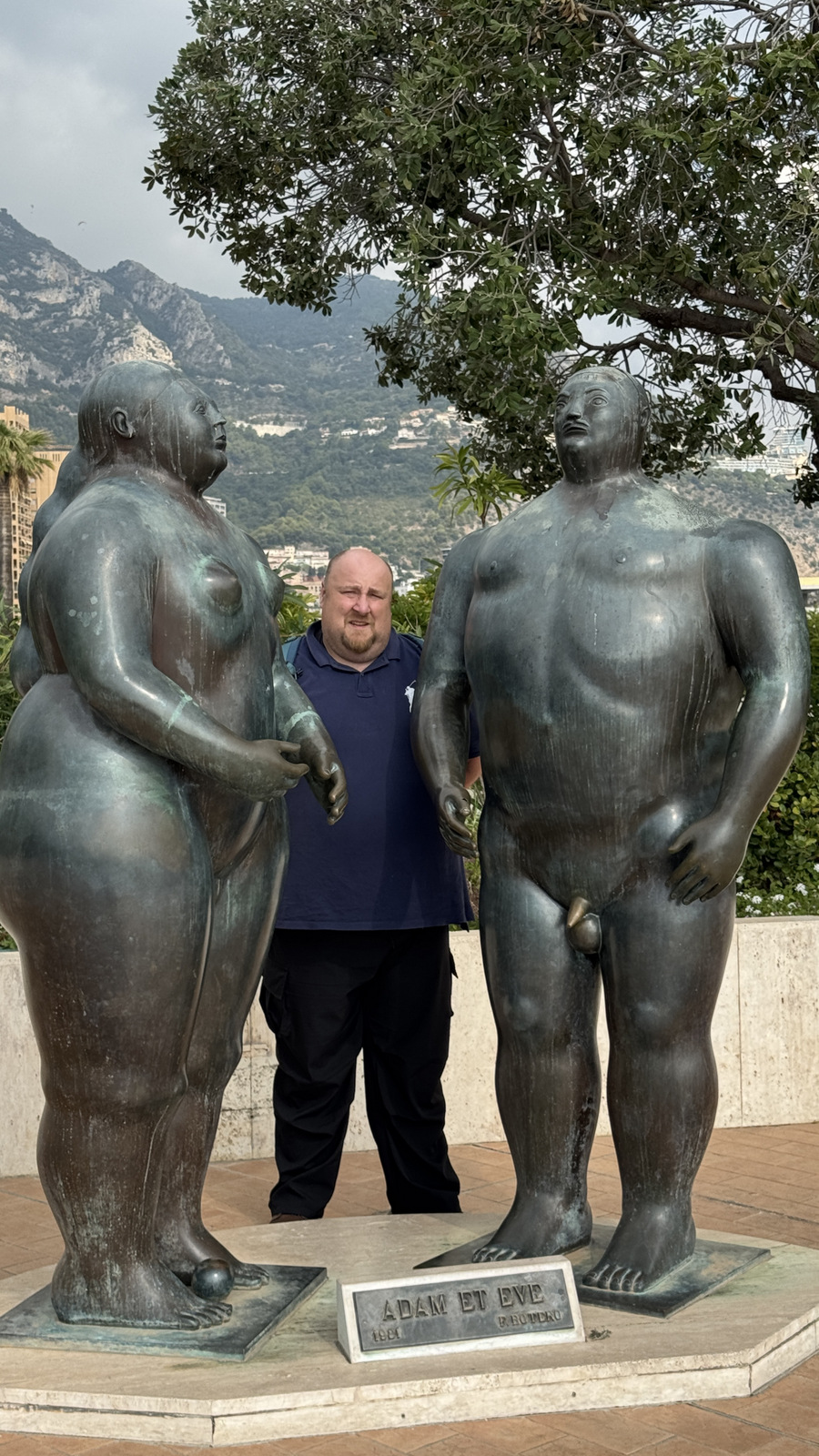
We walked along the promenade featuring the footprints of famous soccer players. Unfortunately, we didn’t find RL9 (Robert Lewandowski). But there was a large paw, as well as Adam and Eve, so in terms of artistic attractions, it wasn’t bad either.
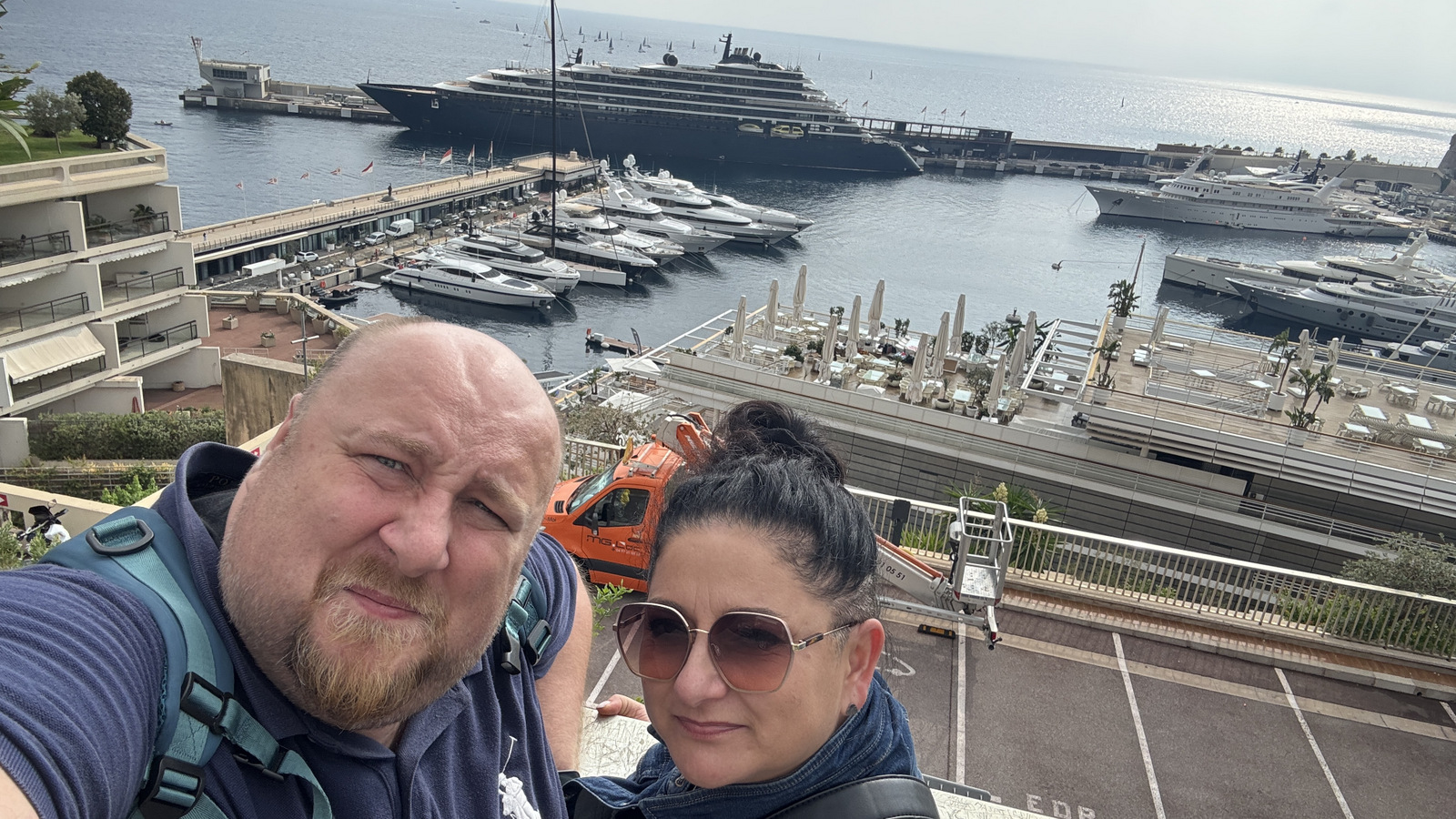
Luxury cars in Monaco are no myth. There really are a ton of them there. One after another, as if someone organized an auto show but forgot to put up a fence.
The train station in Monaco is entirely underground. There are elevators, escalators, and everything works exactly as it should. For the first time on this trip, I was truly grateful to an architect. Unfortunately, right at the station, my phone decided to remind me that Monaco is a separate country. Instead of a French signal, it switched to the local network, and suddenly it turned out I was outside the European Union. So for a moment, I had a luxurious location and a potentially luxurious phone bill. Luckily, we avoided financial disaster.
Antibes and Cannes, or lavender vs. backpack space
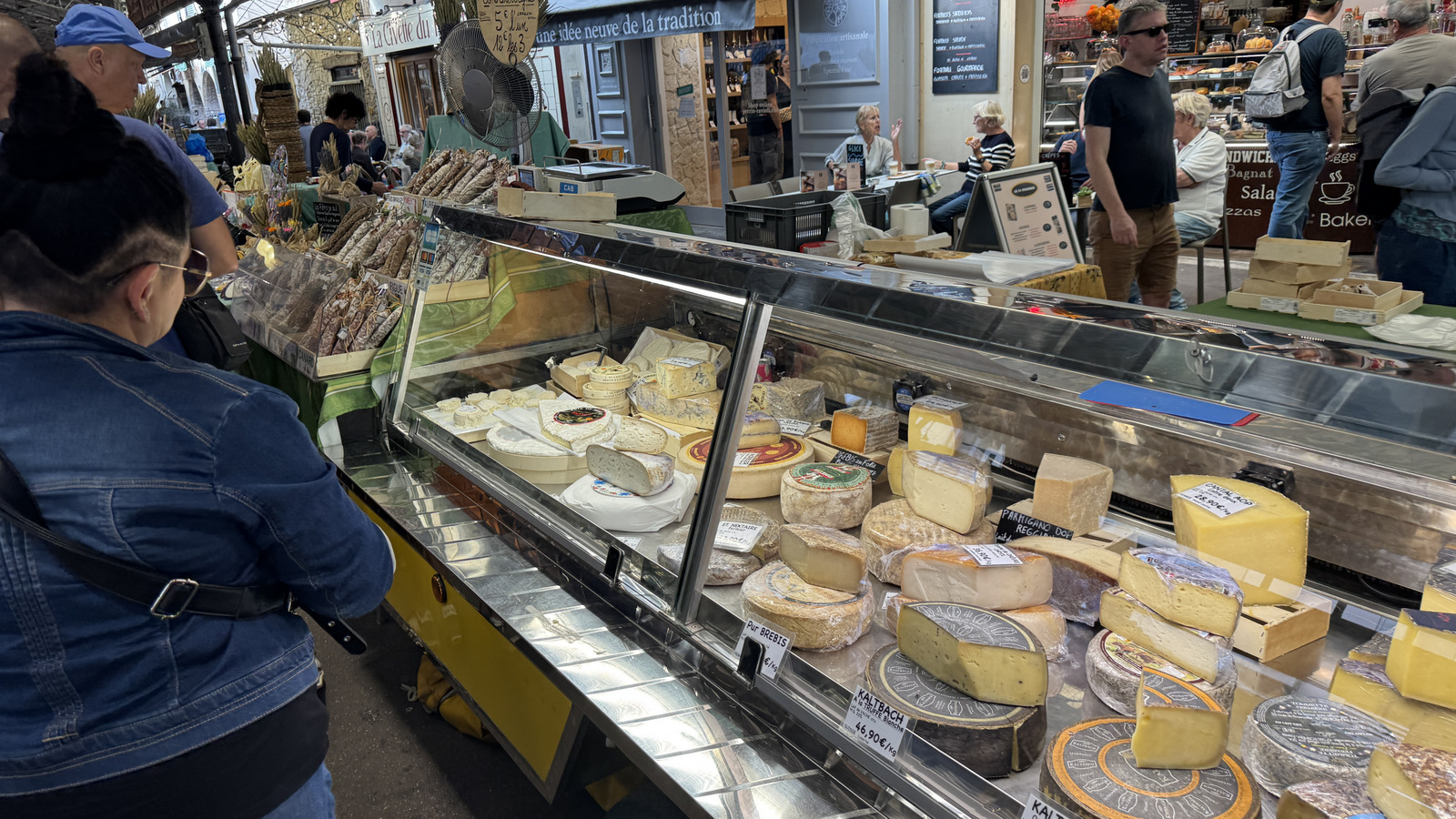
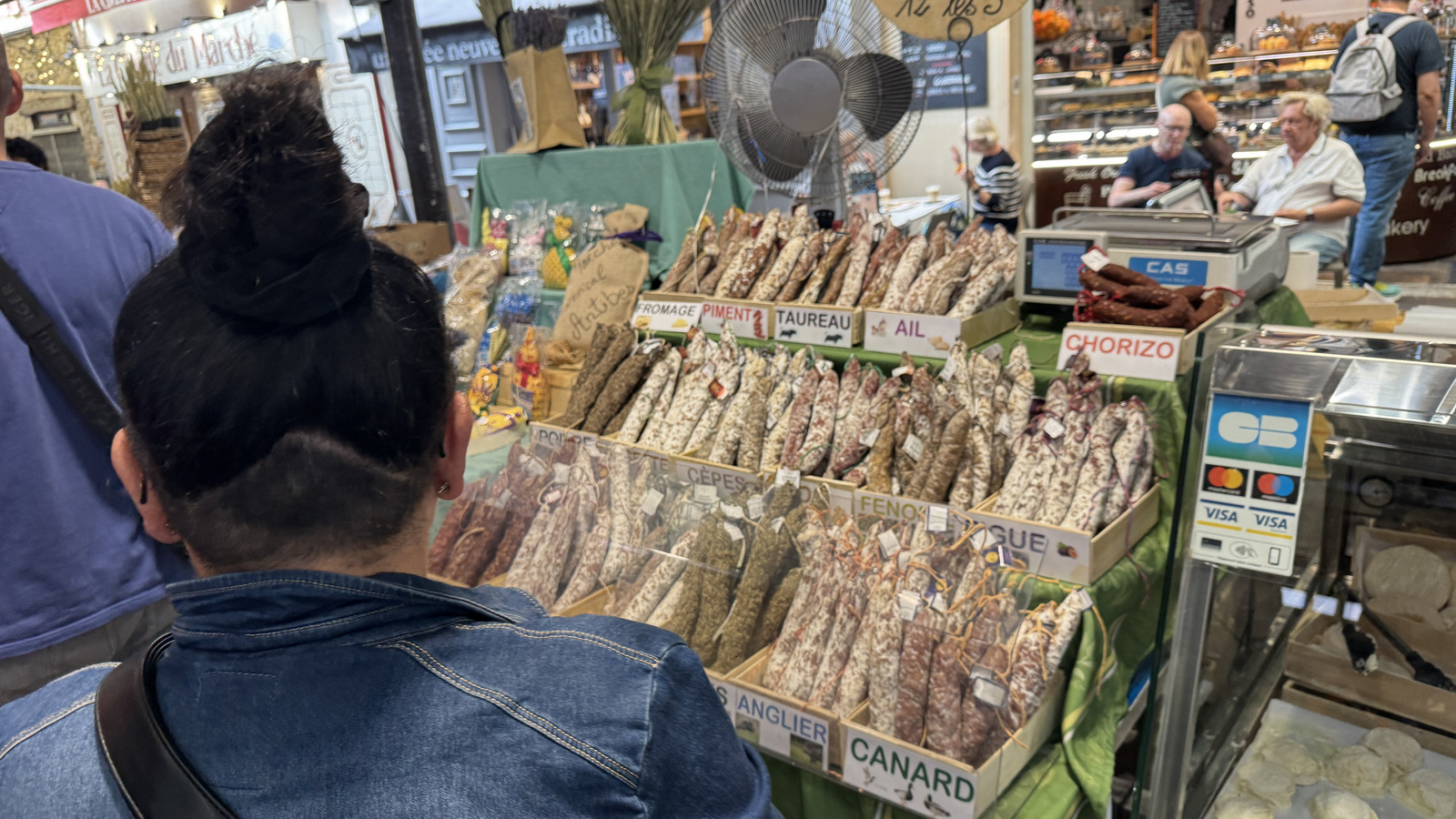
In the morning, we went to Antibes. First, the Provençal market under a covered hall. And right here we made a shopping mistake that I am proud of. We bought so much lavender that from that moment on, every bit of free space in the backpack was designated for lavender. Souvenirs from the following days had to compete with it for room. The lavender won. We had so much of it that upon our return, you could get the impression we hadn’t come back from France, but had started our own plantation.
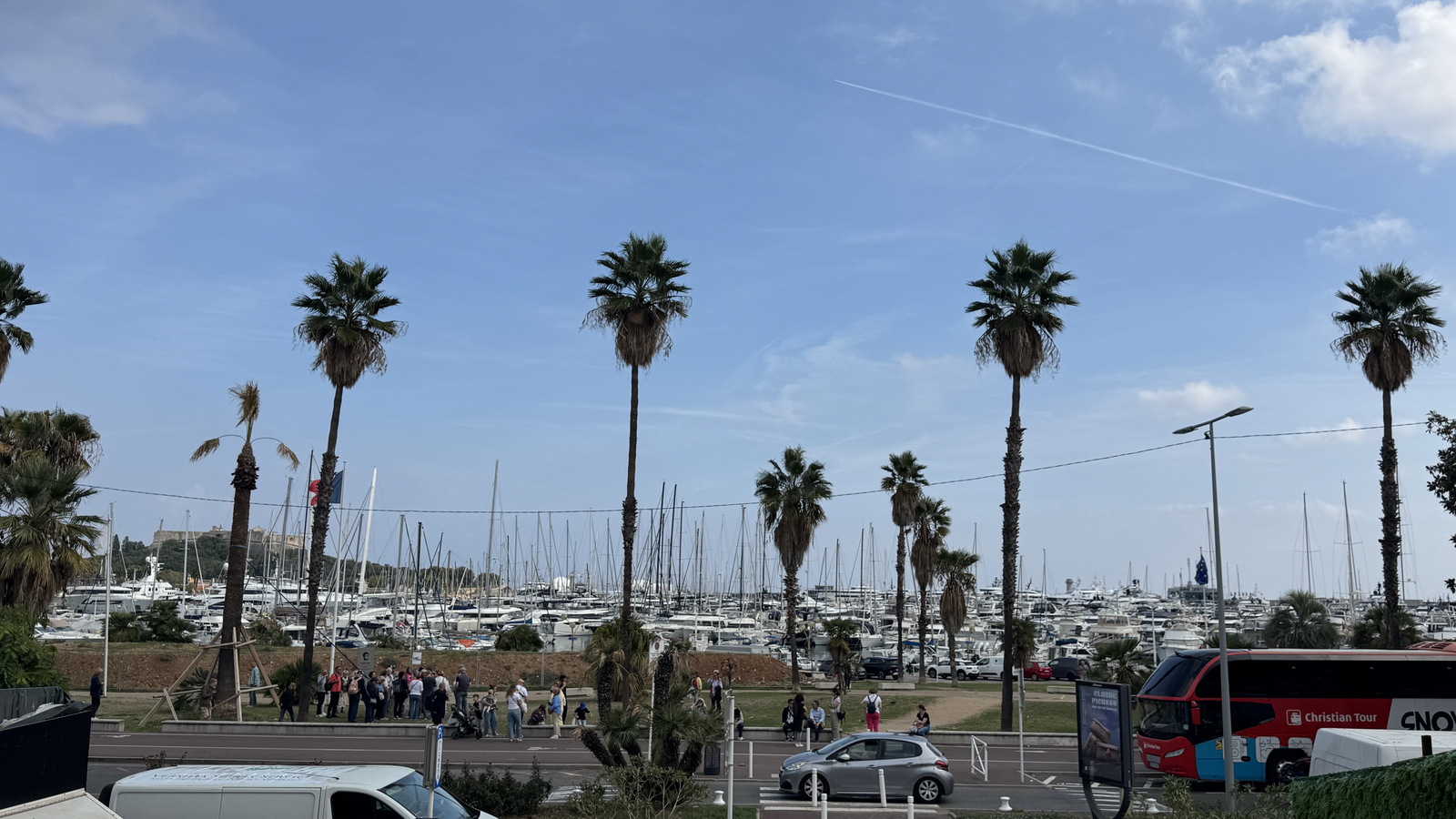
Antibes also has a huge yacht port. About two thousand yachts, Billionaires’ Quay, and views that very clearly remind a person that there are people who own boats bigger than some apartment buildings.
We weren’t going to be outdone. We sat there and ate a baguette and sausages from Carrefour. In a place where champagne and caviar would have definitely been more appropriate.
In the afternoon, Cannes.
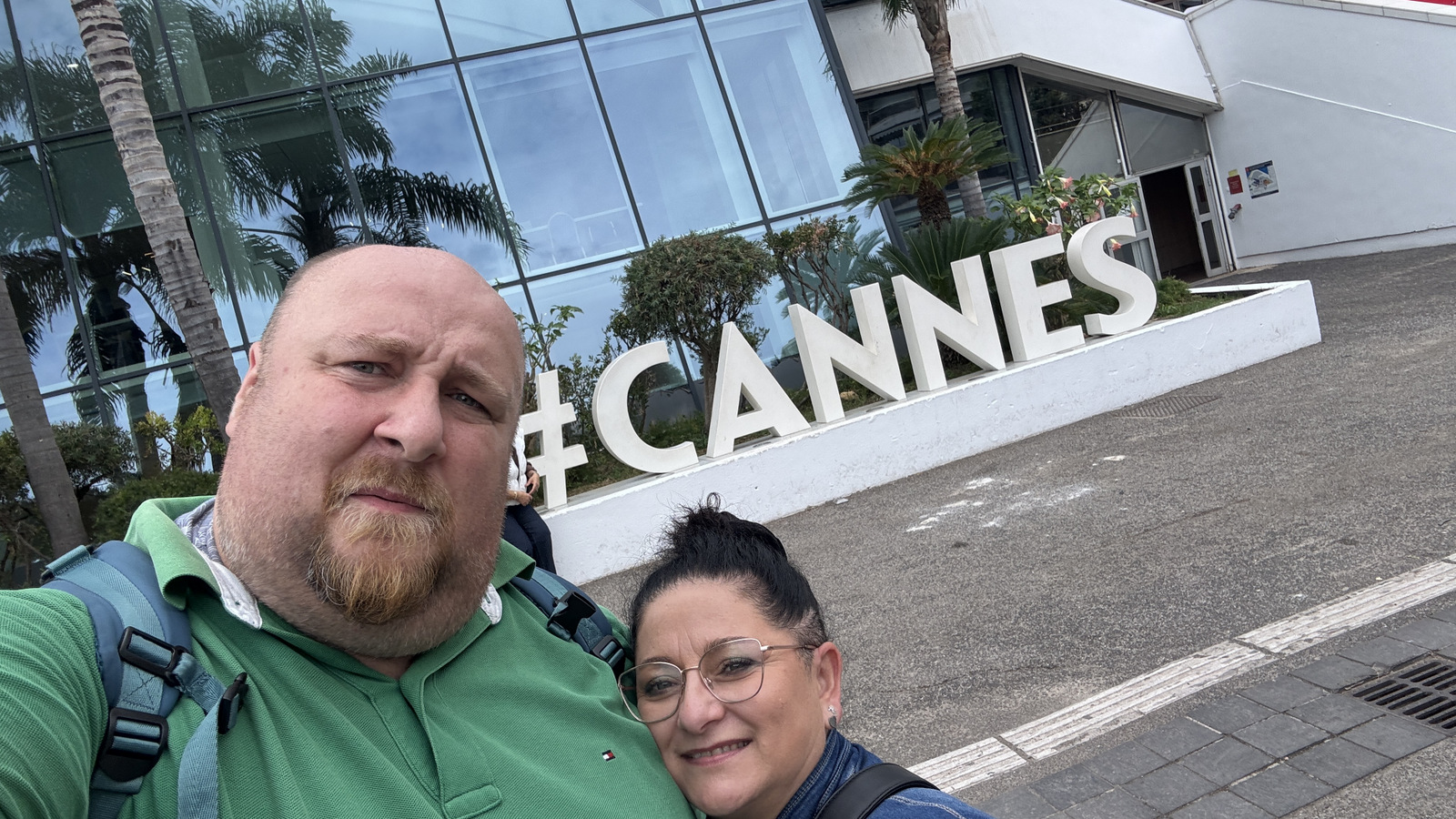
La Croisette is about two kilometers long. We walked it in a gentle, warm rain and dried off in a few minutes. French weather apparently decided there was no point in overdoing it.
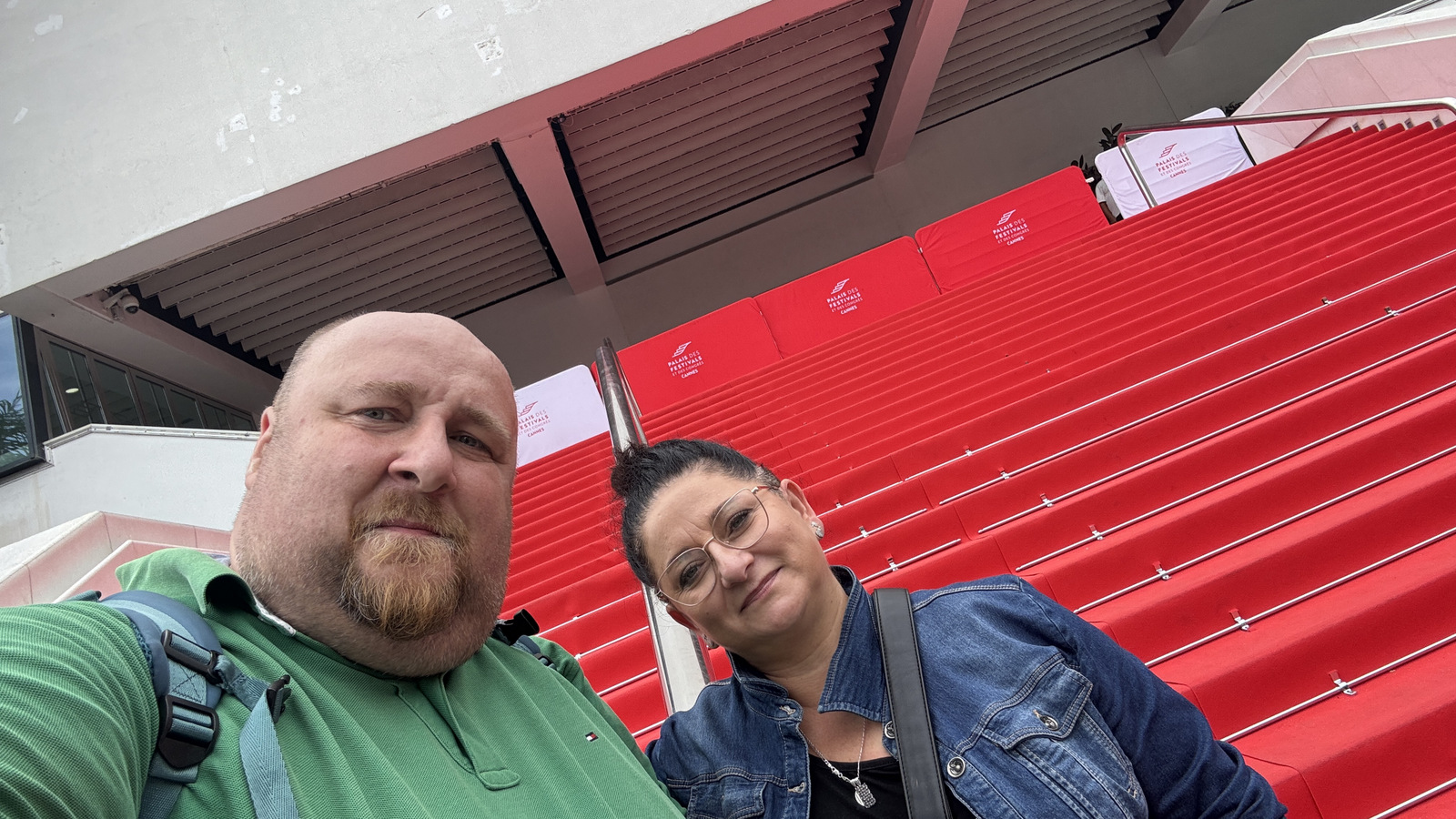
We also went to take a picture on the famous stairs where the stars walk during the film festival. Usually, they are just gray. The red carpet only appears for the festival. We got lucky, though, because some festival event was actually happening, so Cannes looked a bit more cinematic than usual.
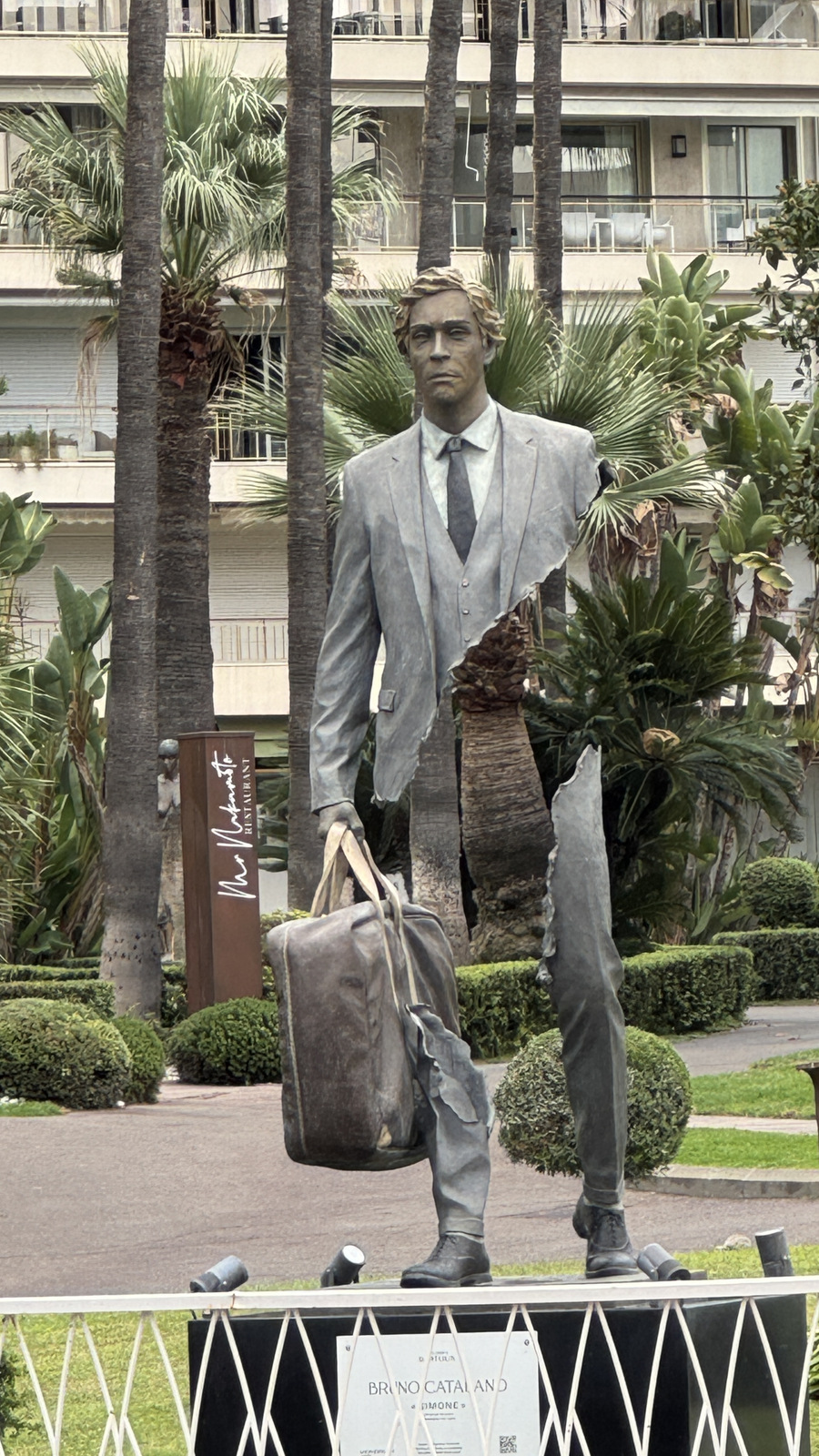
On the promenade, there are also sculptures by Bruno Catalano — characteristic bronze travelers with a chunk of their torso missing, standing on their legs and holding a suitcase. The artist, who emigrated as a child, talked about how every person who leaves their hometown leaves a part of themselves behind. You can see the sea through the hole in the sculpture’s body. A person stops and stares at it longer than they planned to.
Castle Hill, take two
Monday was the nicest day of the entire trip. This time we found the elevator. The funniest part is that it was there the whole time. Right by the quay, a few hundred meters from the spot where four days earlier I had decided that climbing Castle Hill was something we absolutely did not need in our lives. The alternative is the Lesage stairs. Three hundred steps. Three hundred. The mere words “three hundred” should be enough information for a person to go look for an elevator. Fortunately, we looked for it. The truth is, going down the stairs is only slightly better :P.
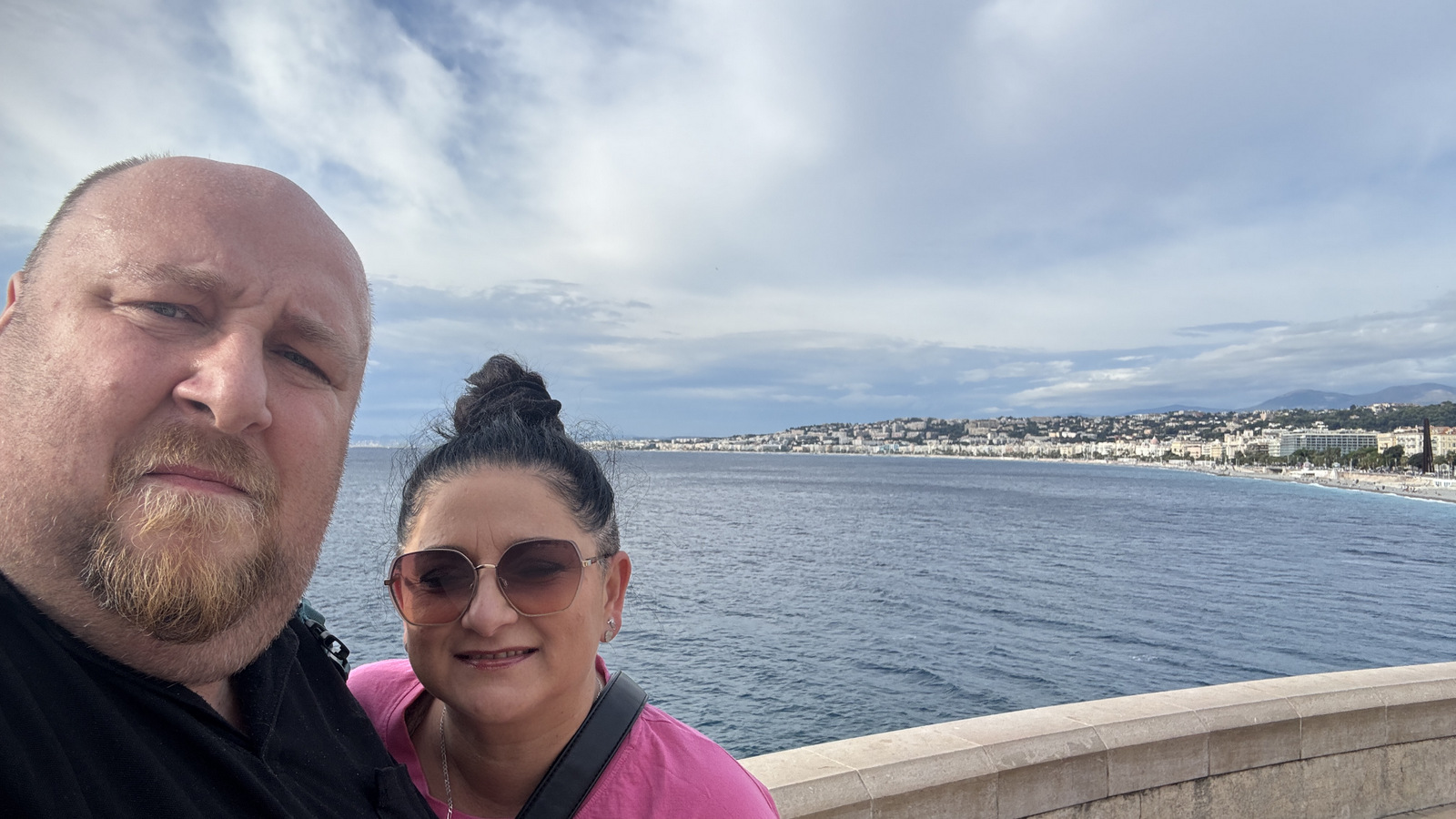
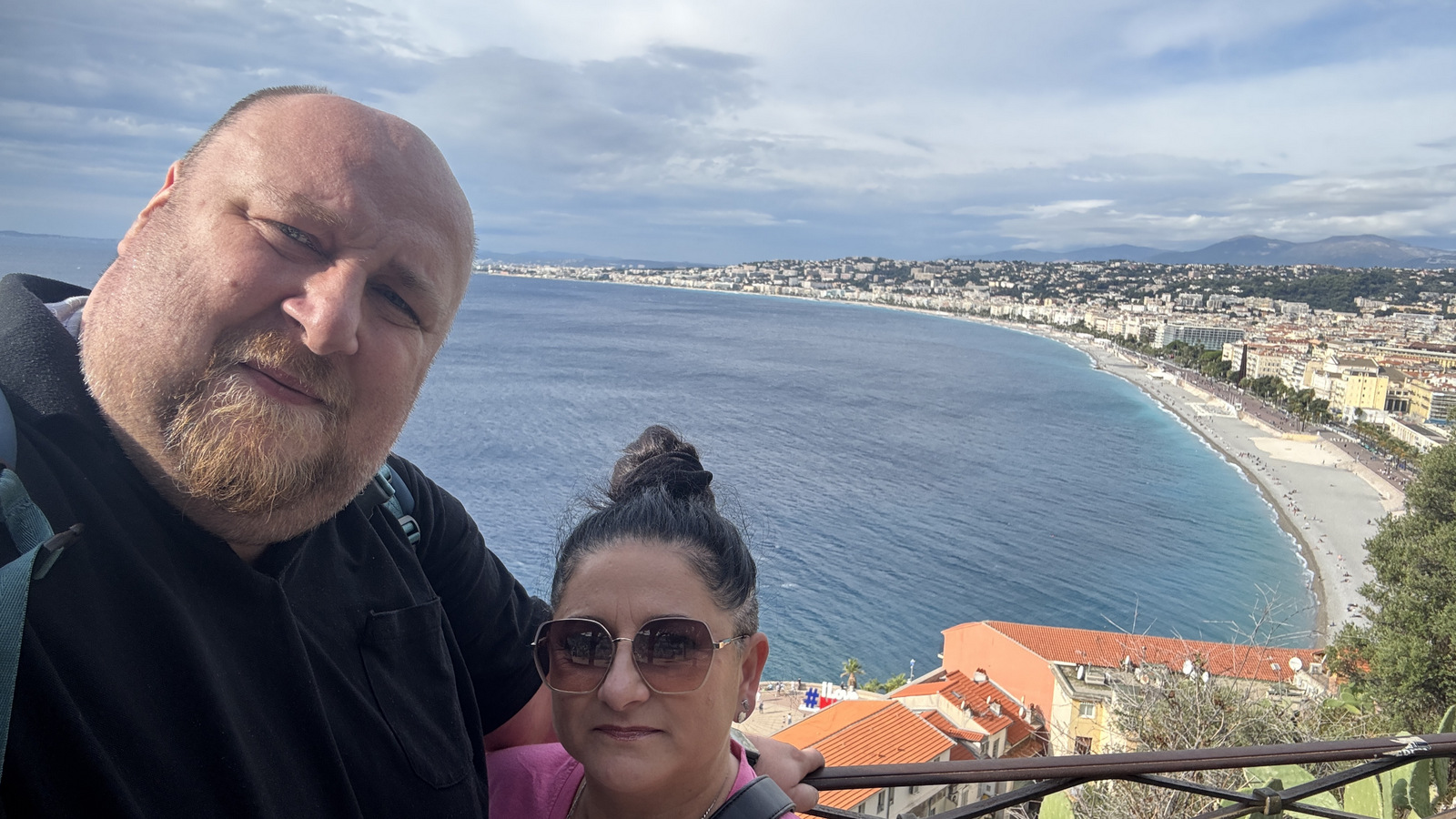
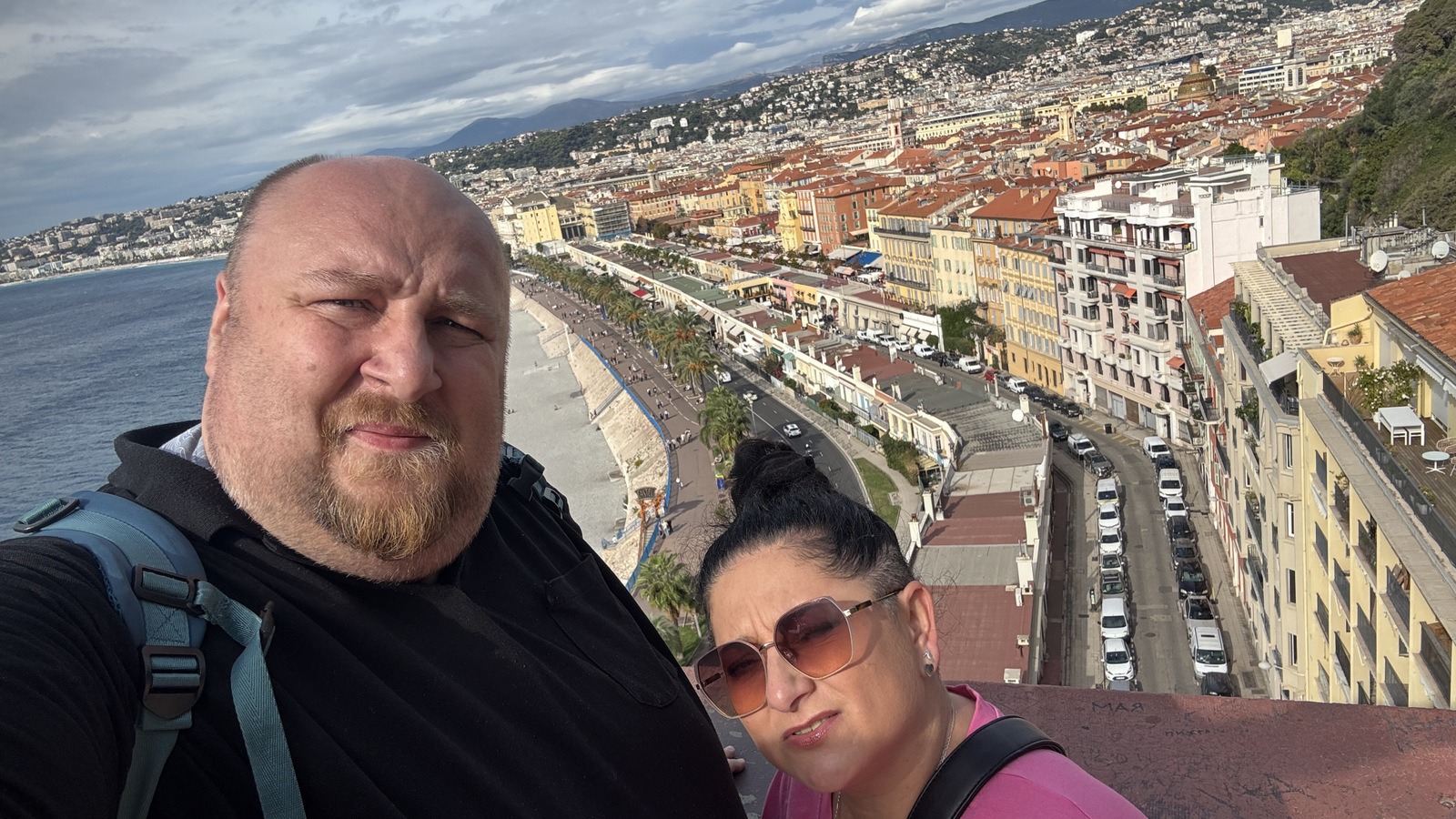
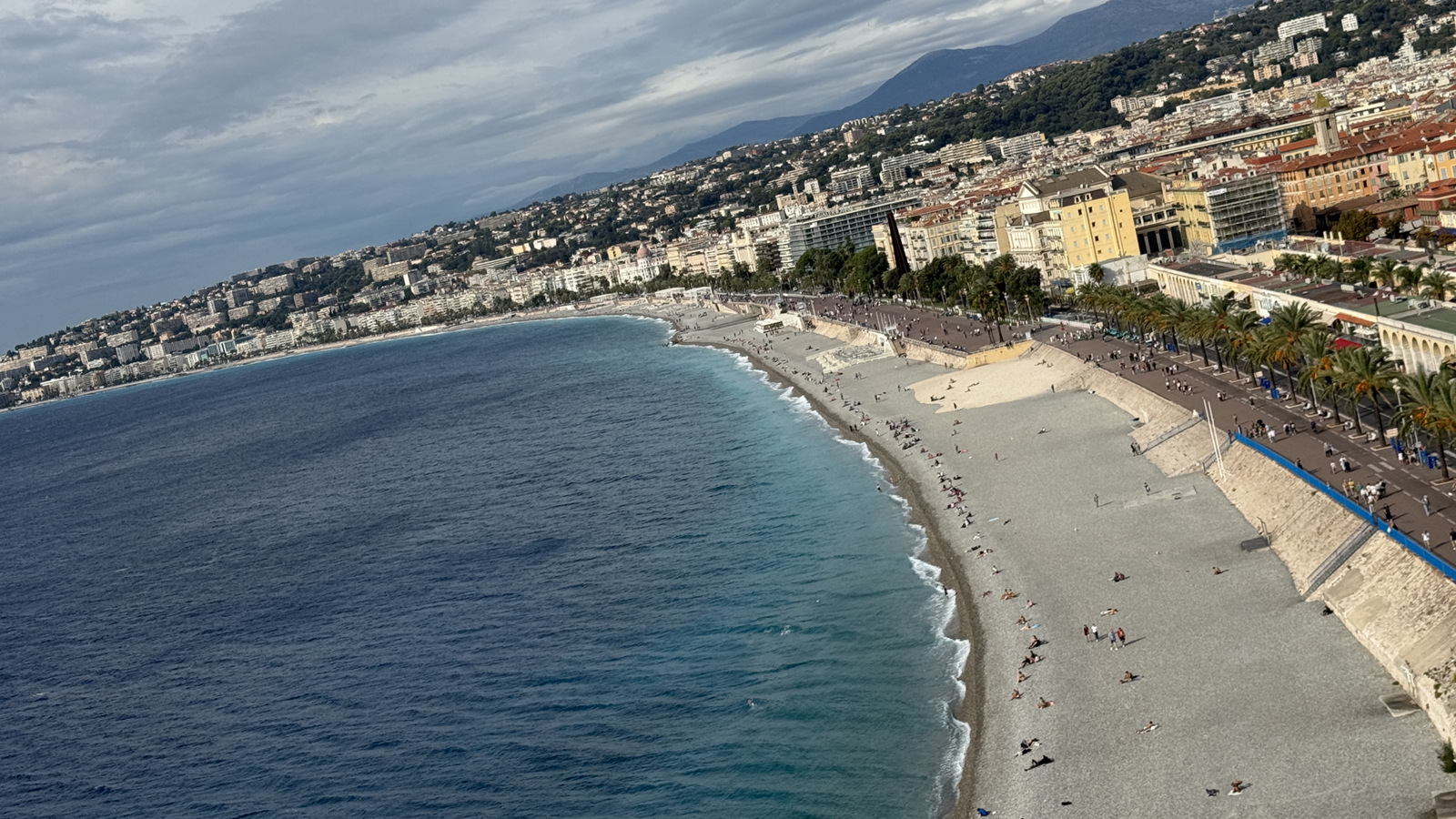
From the top, you can see the entire Bay of Angels, the curve of the Promenade des Anglais, and the orange roofs of Old Nice. We were there in the morning when the sun was still behind us, and the sea came out in photos exactly as it should — like someone had pre-applied a “French Riviera” filter. There is also a waterfall on the hill. Artificial, from the 19th century. When they brought water down from the mountains to Nice, instead of making a regular reservoir, they built a cascade at the top of the hill. Unfortunately, it wasn’t working during our visit… The French…
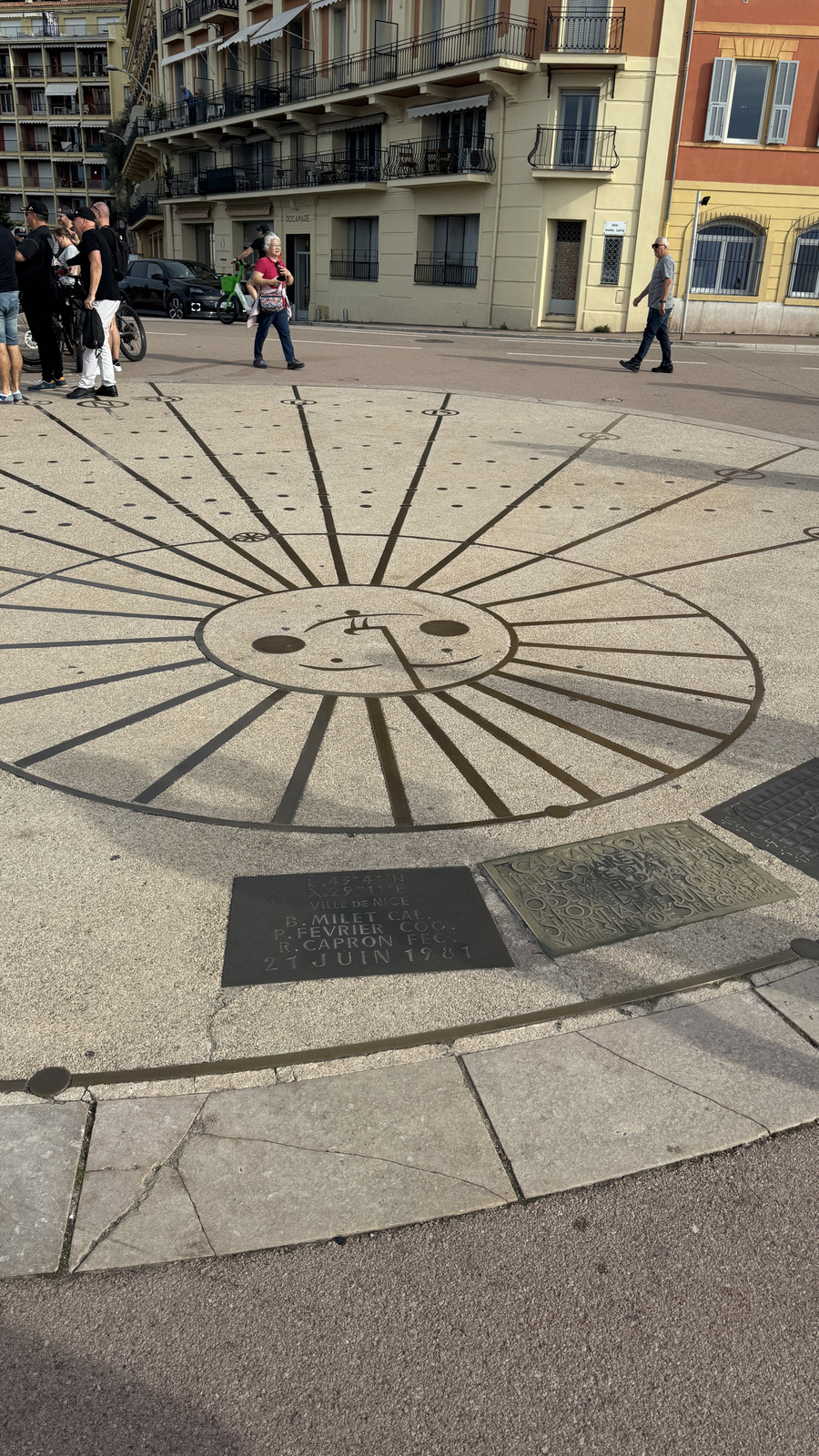
Down on the quay, however, a sundial with the exact coordinates of the city is embedded in the cobblestones. The difference between it and my phone was two hours. The sundial wasn’t wrong. The rest of the world was.
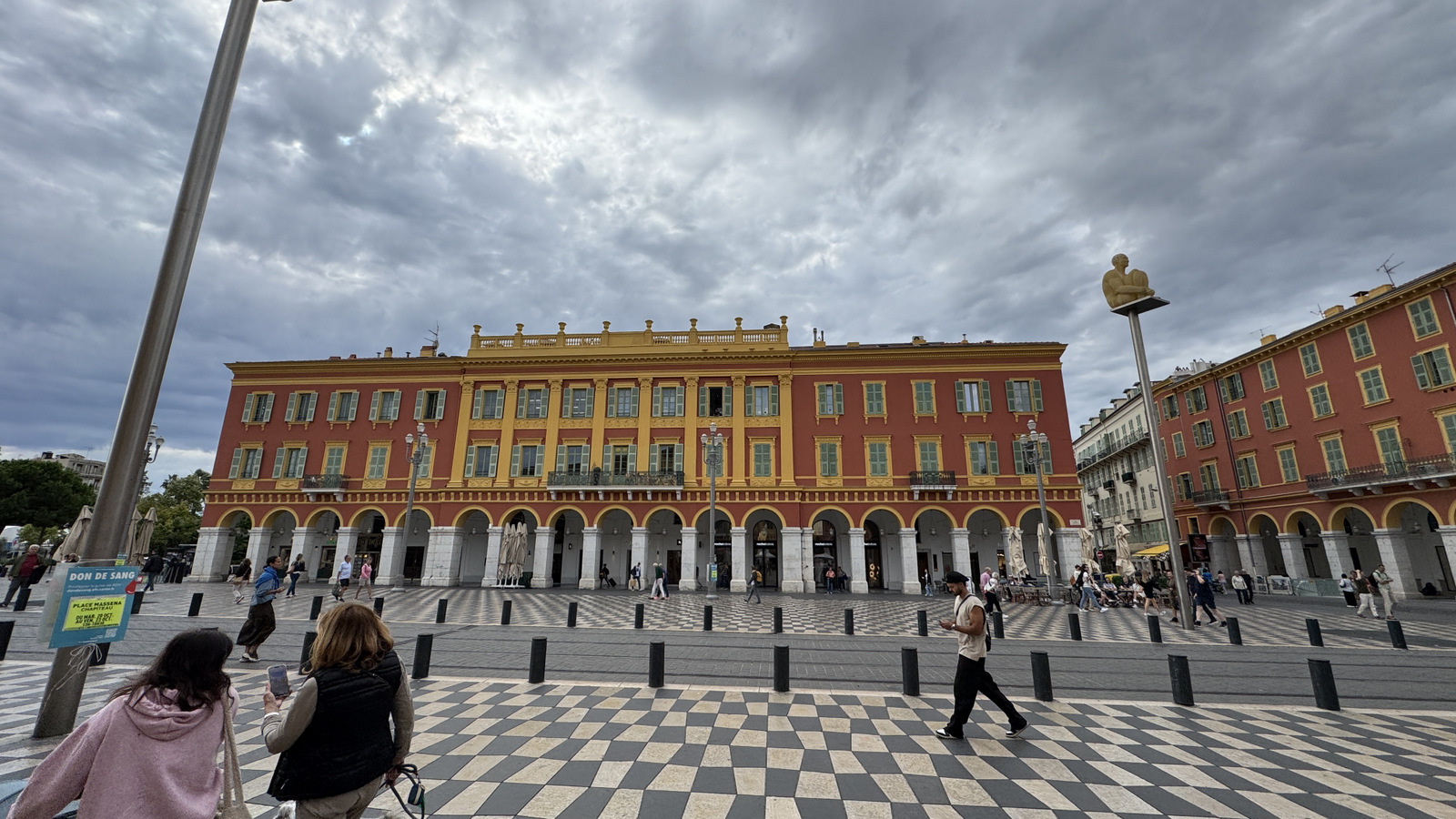
In the evening, we went to Place Masséna. After dark, seven figures perched on tall poles light up there — one symbolically for each continent — and slowly change colors. The square has a characteristic black-and-white checkerboard pavement that reflects the lights and everything around it after it rains. Nice at night looks really spectacular then.
Tuesday, or sixty millimeters of rain
On Tuesday, sixty millimeters of rain fell. Over the previous four days, a total of three had fallen.
So the weather apparently decided that since we were still here, it was worth catching up. We decided to go to a museum. And that’s when Nice went all in. The municipal museums are closed on Tuesdays. All of them. This is the point in a trip when a person starts to suspect that the locals have their own private calendar that tourists don’t get when they buy a ticket.
So we went to a mall instead, but it didn’t thrill us enough to spend half a day there. After a short walk and lunch, we went back to the hotel.
Movie night is also a form of sightseeing. Just more horizontal.
Summary
In five days:
- we visited four cities and one principality,
- we didn’t climb a single hill under our own power if there was any chance of finding an elevator,
- we found three elevators, two of which went exactly where we needed them to,
- we walked several promenades,
- we ate Carrefour baguettes and sausages in places vastly more appropriate for people eating caviar,
- we brought back wholesale quantities of lavender,
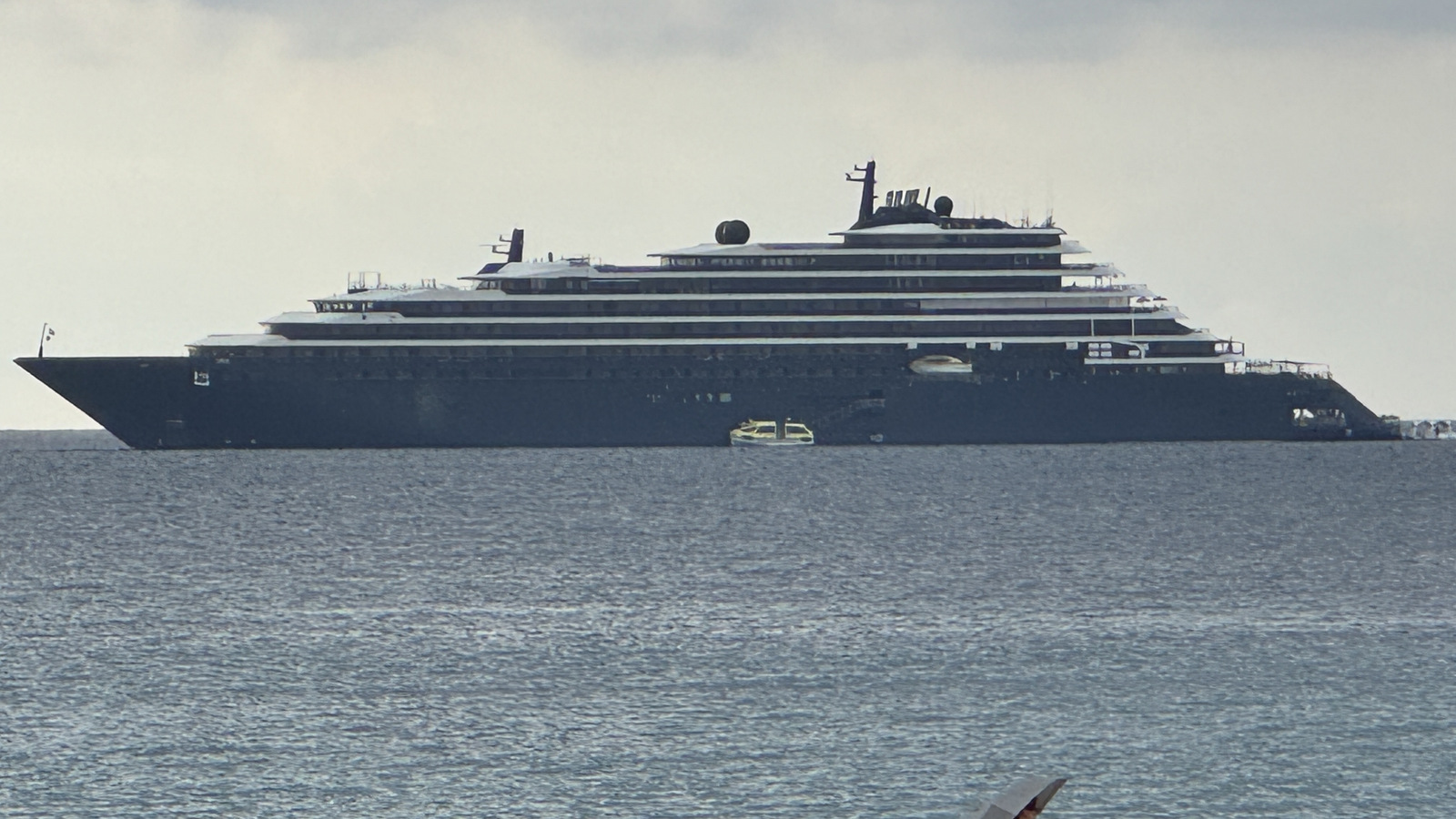
- we saw yachts whose owners probably have no idea how much a Pass SudAzur costs,
- we spent some money, but we didn’t lose a single cent in the casino,
- we took so many photos that my phone once again started negotiating the terms of our ongoing cooperation,
- and we learned that on the French Riviera, the question “is it far?” is significantly less important than the question “is there an elevator?”
I’ll leave you with this conclusion for free:
On the French Riviera, everything that is the prettiest can be seen from sea level or by taking an elevator. The rest is just marketing for people with better knees.